💧 From farms and mines to new housing and data centers, there’s a lot of competition for groundwater. But it isn’t always clear how much is available. The Mountain West News Bureau’s Kaleb Roedel looks at how scientists are trying to take the guesswork out — and farmers are finding ways to get by with less.
Out in Nevada's Carson Desert, it almost feels like another planet.
Sand and sagebrush stretch toward distant mountains, like a painting that never ends. And rising out of the landscape is something that looks like a miniature space station: tall metal poles bristling with sensors, a web of cables, and a solar panel.
Hydrologist Murphy Gardner climbs a ladder to check one of the instruments. He points out a faint whirring sound. The instrument is measuring something that might seem surprising in a place this dry: how much water is disappearing into the atmosphere.
Even desert plants tap into underground supplies. Some, including greasewood, have roots capable of reaching dozens of feet below the surface. They pull up groundwater that's eventually released into the air.
"As you can see just looking out, like each of these plants consuming that over thousands of acres out here in the desert, you end up getting like a pretty large volume of water consumption or discharge," Gardner said.
Understanding that natural water loss is one piece of a much bigger question: How much groundwater can Nevada sustainably use? Hear the full story and more by the Mountain West News Bureau's Kaleb Roedel here.
🏫 The Clark County School District is recommending a major update to its Facility Master Plan that calls for renovating 19 schools, replacing eight and consolidating six more campuses, according to reporting by KNPR's Paul Boger.
The district’s recommendations call for a $3.7 billion investment using restricted bond funds across the district. Officials say the plan would ensure that “students have access to modern, state-of-the-art facilities, regardless of ZIP code.”
It follows a two-year process that included 55 community forums, two districtwide surveys, enrollment analyses and facility evaluations.
The move comes as the district continues to deal with declining enrollment. CCSD officials already anticipate 45,000 fewer students over the next five years. The CCSD School Board is scheduled to discuss the plan at a meeting next Wednesday, Dec. 2.
🏥 The Nevada Health Authority is offering a new way to check eligibility for Medicaid. Medicaid Express on the Nevada Health Link website allows residents to find out online if they qualify and then compare Medicaid managed care plans and provider networks, KOLO-TV in Reno reports.
There are three options. Medicaid offers health coverage at no cost for eligible individuals and families. They can compare managed care plans and select a preferred plan online.

Federal premium tax credits are available to lower monthly costs for those purchasing private health insurance through Nevada Health Link.
Battle Born State Plans are Nevada’s lower-cost public option plans, offered alongside other health plans through the marketplace.
The Nevada Health Authority says the pathway is primarily designed for those younger than 65 who are not enrolled in Medicare, are not applying based on a disability or the need for long-term care, and have income that can be verified electronically.
🔥 After 13 years, Marian Goodell will step down as CEO of the Burning Man Project, the organization that produces the annual Burning Man event in the Black Rock Desert near Gerlach.

Goodell, also a co-founder of the Burning Man Project, made the announcement on Monday, adding that the Project’s search committee and an independent firm would lead the hunt for a new executive. Goodell will stay to help with the executive transition, remain on the Project’s board and assume a new, to-be-determined role with the organization.
Goodell told Billboard on Monday that Burning Man 2027 plans to cap capacity at 64,000, the same attendance number as the 2026 event. A new philanthropic focus within the organization will also allow a wider range of ticket prices for the late August event.
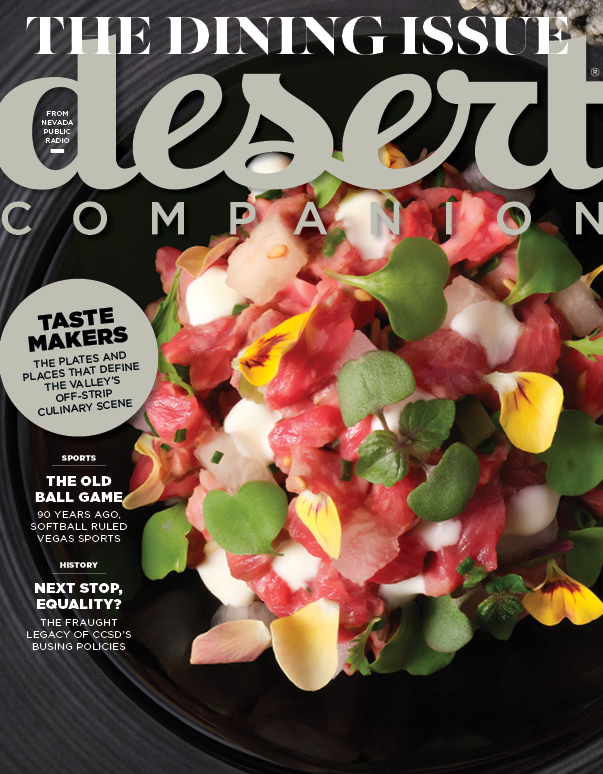
🦃 Around Thanksgiving, many family cooks are thinking about turkey, mashed potatoes and cranberry sauce — or perhaps, for our devoted NPR fans, the late Susan Stamberg’s famous cranberry relish. But not everyone.
The fall holidays in the U.S. include a great variety of traditions — some that apply to cultural groups and others that are particular to individual families.

A group of foodies from a variety of backgrounds shared both their particular customs for this time of year and their thoughts on Thanksgiving generally.
One thing they all had in common? Encouraging people to learn more about the history behind the dishes they put on their tables. Hear the full story by KNPR's Jimmy Romo here.
Editor's note: This segment was originally aired on November 26, 2025. It has since been updated to keep it timely for November 2026.
Part of these stories are taken from KNPR's daily newscast segment. To hear more daily updates like these, tune in to 88.9 KNPR FM.